
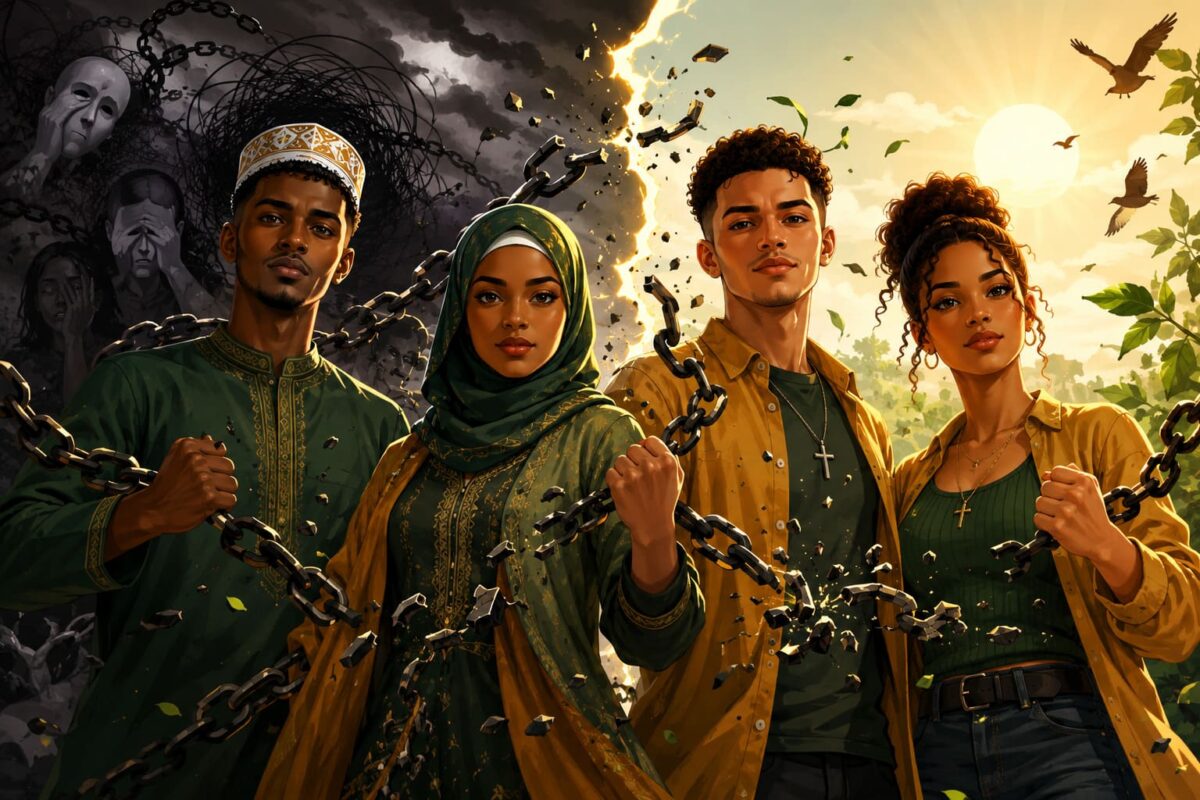
Something quiet is happening beneath the noise of social media trends and headline chaos, and if you lean in just a little closer, you can feel it. Young people are fighting battles that rarely make it into conversations at dinner tables or policy meetings, yet those battles are shaping the future in ways most systems still fail to recognize. Anxiety, identity pressure, economic uncertainty, and the weight of expectation are not abstract ideas for them. These are daily negotiations. What makes this moment remarkable is not the struggle itself, but the shift in how youth are choosing to respond. They are not collapsing under pressure. They are recalibrating what strength actually looks like.
Across communities influenced by the work of the Golden Acacia Foundation, a different narrative is emerging. It is not built on pity or rescue. It is grounded in agency. Young leaders are organizing mental wellness circles, creating safe digital spaces, and turning vulnerability into a form of leadership. That shift challenges long-held beliefs that emotional openness signals weakness. It reframes it as strategic clarity. When a young person says “I am not okay,” it is no longer a confession of defeat. It is the first move toward reclaiming control.
A story from Nairobi captures this transformation in a way statistics never could. A university student, once known for isolating himself after losing a close friend, started hosting weekly peer sessions in a borrowed classroom. There was no funding, no formal training, just a decision to create a space where silence would not dominate. Within months, attendance grew beyond capacity. People did not come for solutions. They came because someone dared to make honesty visible. That is how movements begin. Not with grand strategies, but with one person refusing to stay quiet.
Mental health conversations often get trapped in clinical language, which can feel distant to someone living the experience. Youth are rewriting that script. They talk about burnout in terms of survival, not productivity. They describe emotional fatigue as something physical, something you carry in your chest and shoulders. That language matters. It makes the experience real, tangible, and shared. When people understand what they feel, they are more likely to seek support rather than bury it.
Technology plays a complicated role in this landscape. It amplifies pressure through comparison, yet it also offers connection at scale. Young creators are using platforms to normalize therapy, share coping strategies, and challenge stigma in ways traditional campaigns struggled to achieve. A short video about panic attacks can reach millions within hours. That kind of reach changes perception faster than any policy document ever could. Still, it requires discernment. Not every voice online carries responsibility, and youth are learning to separate noise from meaningful guidance.
Economic pressure adds another layer to these silent battles. Many young people are navigating unemployment, underemployment, or unstable income streams while being told to stay resilient. That expectation can feel disconnected from reality. Mental wellness cannot exist in isolation from financial stability. Youth leaders are beginning to connect these dots, advocating for systems that address both psychological and economic well-being. It is not enough to tell someone to stay positive when their basic needs remain uncertain.
Cultural expectations also shape how mental health is perceived. In many communities, strength has been defined by endurance and silence. Speaking about emotional distress can be seen as a departure from tradition. Young people are not rejecting culture. They are evolving it. They are asking difficult questions about what it means to be strong in a world that looks very different from the one their parents grew up in. That tension creates friction, but it also creates growth.
The role of peer support cannot be overstated. While professional services remain essential, many young people first open up to someone who understands their context. Peer-led initiatives often bridge gaps that formal systems cannot reach. They create immediacy and relatability. When someone hears “I have been there too,” it dismantles isolation in a way clinical advice alone cannot achieve. That human connection becomes the foundation for deeper healing.
There is also a quiet rebellion happening against perfectionism. Youth are questioning the idea that success must come at the cost of mental stability. They are redefining achievement to include rest, boundaries, and emotional clarity. This is not laziness. It is strategic sustainability. Burnout does not produce long-term impact. Clarity does. That mindset shift could redefine entire industries if it continues to gain traction.
Education systems are slowly catching up, but progress remains uneven. Some institutions are integrating mental health programs into their frameworks, while others still treat it as an afterthought. Youth advocacy is pushing this conversation forward. They are not waiting for permission. They are demanding environments that support their well-being alongside their ambitions. That pressure is necessary. Systems rarely change without it.
The influence of organizations like the Golden Acacia Foundation becomes evident in how these conversations are structured. By focusing on peace, security, and social cohesion, they recognize that mental wellness does not exist in isolation. It is deeply connected to the environment people live in. When communities feel safe and connected, individuals are more likely to thrive. That holistic approach moves beyond surface-level solutions.
Critics sometimes argue that the focus on mental health is excessive, that it creates fragility. That perspective overlooks a critical point. Ignoring mental strain does not build resilience. It builds suppression. True resilience comes from understanding challenges and developing tools to navigate them. Youth are not becoming weaker. They are becoming more self-aware, which is far more powerful in the long run.
There is a quiet courage in choosing to confront what hurts instead of pretending it does not exist. That courage does not always look dramatic. Sometimes it is as simple as showing up to a conversation, sending a message asking for help, or deciding to rest when everything in you says keep pushing. These small decisions accumulate. They reshape identities, relationships, and communities.
What stands out most is not the scale of the struggle, but the depth of transformation happening within it. Young people are not waiting for a perfect system to emerge. They are building something new in real time, using the tools available to them. They are turning silent battles into shared experiences, and in doing so, they are rewriting the narrative of mental wellness. It is no longer about surviving quietly. It is about living honestly, even when that honesty feels uncomfortable, and trusting that in that space, something stronger begins to take shape.
