
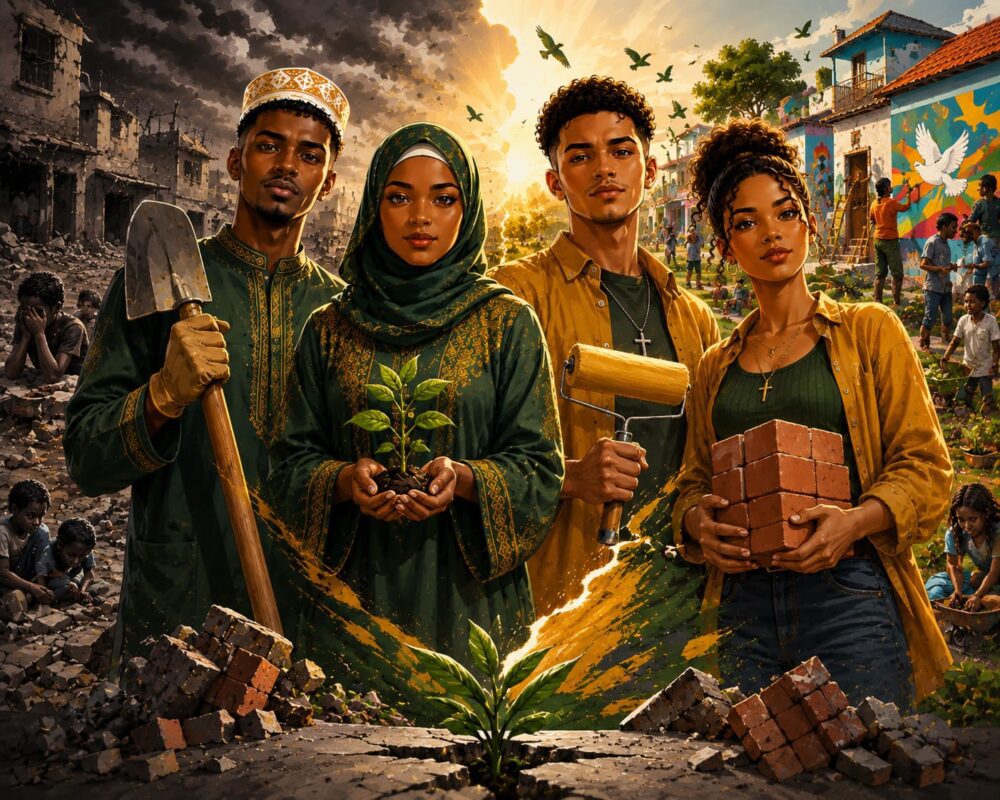
There is a growing realization that some of the most effective peacebuilders are not found in formal offices or international forums but within the communities themselves. Young people are stepping into roles that require courage, empathy, and persistence. They are not waiting for permission. They are responding to the urgency of their environments. What makes their approach distinct is its authenticity. It is rooted in lived experience rather than theoretical frameworks.
In regions where conflict has left deep scars, rebuilding trust can feel almost impossible. Yet young peacebuilders are proving that change often begins with small, consistent actions. A conversation that challenges a stereotype, an initiative that brings divided groups together, a moment of listening without judgment. These actions may seem minor in isolation, but they accumulate into something powerful. They create momentum that gradually shifts the narrative.
A case from a peri-urban settlement highlights this dynamic. Tensions between youth groups had escalated into frequent confrontations, fueled by misunderstandings and competition for limited resources. Instead of escalating further, a group of young leaders initiated joint community projects. They focused on shared goals such as cleaning public spaces and organizing local events. Working side by side changed perceptions. Rivalries began to soften. Collaboration replaced hostility.
The concept of security is also being redefined. Traditional approaches often emphasize enforcement and control. Young peacebuilders are introducing a more holistic perspective. They view security as something that includes emotional safety, social cohesion, and economic stability. This broader understanding allows them to address root causes rather than symptoms. It creates a more sustainable approach to peace.
Communication plays a central role in these efforts. Many conflicts persist because of miscommunication or lack of dialogue. Youth are creating platforms where conversations can happen openly. They encourage listening as much as speaking. This balance is crucial. It ensures that all voices are heard, which reduces feelings of marginalization. When people feel acknowledged, they are less likely to resort to conflict.
There is also a strong emphasis on inclusion. Young peacebuilders recognize that lasting change requires participation from all segments of the community. They actively engage women, marginalized groups, and individuals who are often excluded from decision-making processes. This inclusivity strengthens the legitimacy of their initiatives and ensures that solutions reflect diverse perspectives.
The influence of organizations like the Golden Acacia Foundation becomes evident in how these efforts are structured. By focusing on social cohesion alongside peace and security, they provide a framework that supports youth leadership. This approach acknowledges that young people are not just beneficiaries of peace initiatives. They are architects of change. Their involvement is not optional. It is essential.
Challenges remain significant. Limited resources, skepticism from older generations, and entrenched divisions can slow progress. Yet these obstacles have not deterred young peacebuilders. Instead, they have adapted. They leverage creativity, build partnerships, and remain persistent. Their resilience becomes a defining feature of their work.
One of the most compelling aspects of youth-led peacebuilding is its adaptability. Young people are quick to respond to changing dynamics. They adjust strategies based on feedback and evolving circumstances. This flexibility allows them to remain effective in environments that are often unpredictable. It contrasts with more rigid approaches that struggle to adapt.
There is also an emerging focus on mental wellness within peacebuilding efforts. Young leaders understand that unresolved trauma can perpetuate cycles of conflict. By integrating mental health support into their initiatives, they address both emotional and social dimensions of peace. This integration creates a more comprehensive approach that acknowledges the complexity of human experiences.
Critics sometimes question whether these efforts can scale. They argue that localized initiatives may not translate into broader impact. This perspective overlooks how change often spreads. Successful models inspire replication. Ideas travel. What begins in one community can influence others, especially in an interconnected world. Youth are leveraging this interconnectedness to expand their reach.
There is something profoundly hopeful about watching young people transform environments that once seemed beyond repair. They are not ignoring the challenges. They are confronting them with creativity and determination. Their work does not always make headlines, yet it is reshaping the foundations of their communities.
What emerges from this movement is a redefinition of what it means to build peace. It is no longer confined to formal agreements or external interventions. It is embedded in everyday actions, in relationships, in choices that prioritize understanding over division. Young peacebuilders are showing that even in the most broken contexts, there is potential for renewal. That potential grows stronger each time someone chooses to believe that change is possible and acts on that belief.
