
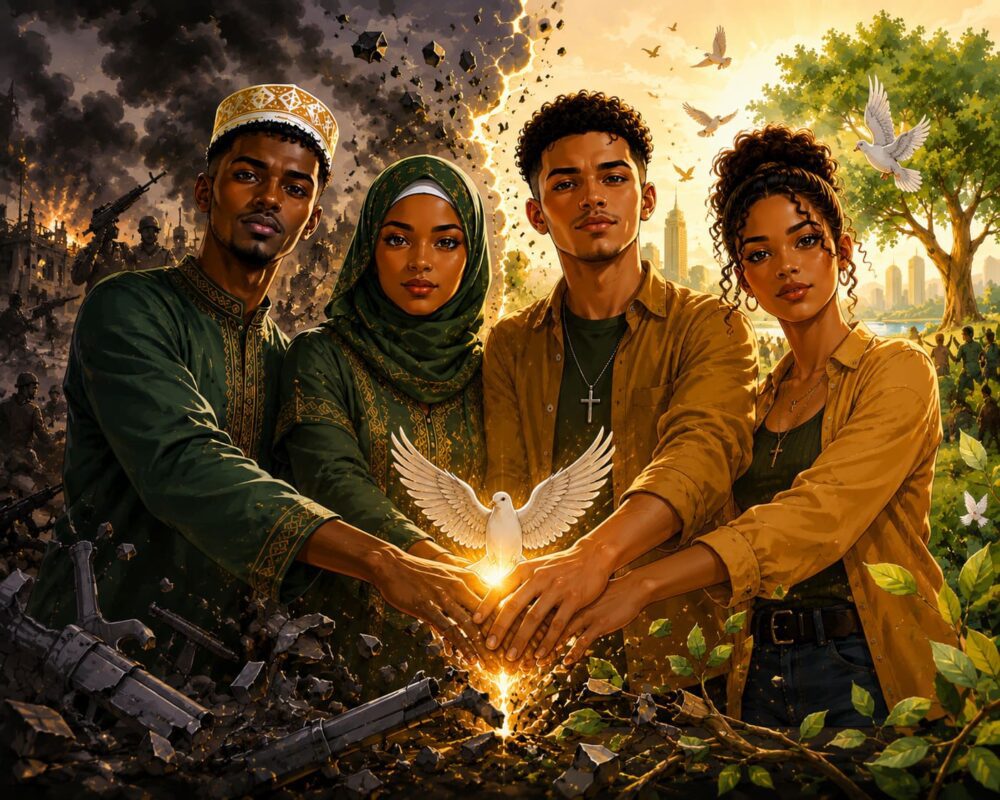
Something unexpected is unfolding in places once defined by tension, and it is not coming from formal institutions or high-level negotiations. It is rising from young people who refuse to inherit cycles of conflict as their default reality. Peace, for them, is no longer an abstract concept discussed in policy rooms. It is a daily practice shaped by choices, conversations, and courage. What makes this shift powerful is its subtlety. It does not always announce itself loudly, yet its impact travels far beyond what most systems are prepared to measure.
In communities connected to the mission of the Golden Acacia Foundation, a new kind of leadership is emerging. It does not rely on authority or hierarchy. It is built on trust, relatability, and proximity to the problem. Young leaders are stepping into spaces where conflict once dominated and introducing dialogue that feels accessible rather than imposed. That approach matters. People are more willing to listen when the messenger understands their reality from the inside rather than observing it from a distance.
A small town in western Kenya offers a glimpse into this transformation. Local tensions between groups had simmered for years, often escalating into hostility during periods of stress. Instead of waiting for external intervention, a group of young people organized informal gatherings centered around shared interests such as sports and storytelling. What began as simple interactions slowly evolved into deeper conversations. Over time, suspicion gave way to familiarity. That shift did not happen overnight, yet it demonstrated how consistent, human-centered engagement can reduce conflict more effectively than one-off interventions.
Peacebuilding among youth often starts with reframing identity. Conflict thrives on division, on the idea that differences are threats rather than assets. Young people are challenging that narrative by creating spaces where diversity becomes a point of connection. They highlight shared experiences, common goals, and mutual aspirations. This does not erase differences, but it changes how those differences are perceived. It turns them into opportunities for learning rather than triggers for confrontation.
Technology has amplified these efforts in unexpected ways. Digital platforms allow young peacebuilders to share stories, organize initiatives, and challenge harmful narratives at scale. A single post promoting dialogue can reach thousands within hours, influencing perceptions beyond immediate communities. That reach comes with responsibility. Misinformation can spread just as quickly. Youth are learning to navigate this space carefully, understanding that the same tools that build peace can also deepen division if used carelessly.
Economic factors remain deeply intertwined with conflict dynamics. Limited opportunities often create frustration, which can be redirected into tension between groups. Young leaders are increasingly aware of this connection. They are not only facilitating conversations but also exploring solutions that address underlying economic challenges. Initiatives that combine peacebuilding with entrepreneurship or skills development create pathways for stability that go beyond dialogue alone.
Cultural traditions play a complex role in shaping peace efforts. In many communities, elders have historically guided conflict resolution. Youth are not rejecting this wisdom. They are finding ways to integrate it with contemporary approaches. This collaboration creates a bridge between generations, allowing traditional knowledge to coexist with modern perspectives. It strengthens legitimacy and ensures that peace initiatives resonate across different age groups.
One of the most powerful tools in youth-led peacebuilding is storytelling. Sharing personal experiences humanizes situations that might otherwise be reduced to stereotypes. When someone hears a story that reflects their own struggles, it becomes harder to view the other side as an enemy. Stories create empathy, and empathy disrupts conflict. This simple yet profound mechanism continues to shape how young people approach peace.
There is also a shift in how success is defined. Traditional peace efforts often focus on immediate outcomes, such as reduced violence or signed agreements. Youth-led initiatives tend to prioritize long-term relationships. They understand that sustainable peace is built on trust that develops over time. This perspective requires patience, which can be challenging in environments that demand quick results. Still, it offers a more durable foundation.
Education systems have an opportunity to reinforce these efforts. Integrating peace education into curricula can equip young people with skills in conflict resolution, critical thinking, and emotional intelligence. Some institutions are beginning to adopt this approach, though progress remains uneven. Youth advocacy continues to push for broader adoption, emphasizing that peace is not a separate subject but a core life skill.
Skepticism often surrounds youth-led initiatives, with critics questioning their capacity to handle complex conflict dynamics. This perspective underestimates the value of lived experience. Young people understand the nuances of their communities in ways that external actors may not. Their proximity allows them to identify subtle shifts and respond quickly. That responsiveness is a significant advantage in dynamic environments.
There is a quiet resilience in choosing dialogue over division, especially in contexts where conflict has become normalized. It requires individuals to challenge not only external pressures but also internal biases. Youth are demonstrating that this is possible. They are showing that peace is not a passive state but an active process that demands intention and effort.
What stands out most is the realization that calm does not emerge from silence but from understanding. Young people are not waiting for perfect conditions to create peace. They are building it in real time, often with limited resources but abundant determination. Each conversation, each initiative, each moment of connection contributes to a larger transformation. It is not always visible at first glance, yet it is reshaping communities in ways that will be felt for generations.
